
Hipobuy QC photos, shipping lines and the clocks around a weigh-in
What the warehouse checks, how to read the photos with a rehearsal in mind, how to pick a line by step size, and the deadlines after delivery.
What the warehouse checks on arrival
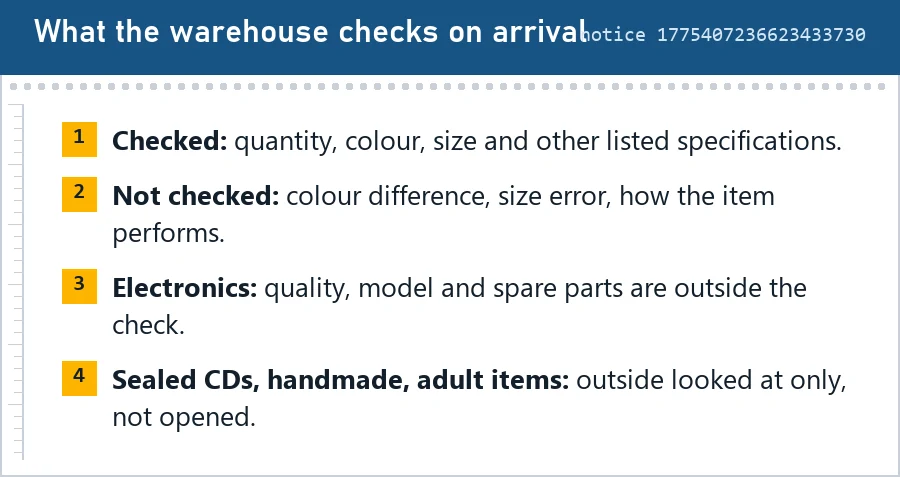
Hipobuy's inspection rules (inspection rules) say eligible incoming packages are opened and checked for prohibited items, with the stated sealed-item exceptions before it is weighed and put into storage. The quality check verifies quantity, colour, size and other listed specifications, after which the item is re-bagged.
The page excludes three things: small colour or size deviations and how well an item works; anything about the quality, model number or accessories of electronics and other technical goods; and the inside of sealed CDs, handmade goods and adult products, which are looked at from the outside only.
The weighing step is the one that feeds the parcel estimate. It happens once, on arrival, with whatever packaging the item came in.
Reading QC photos before you pay to ship
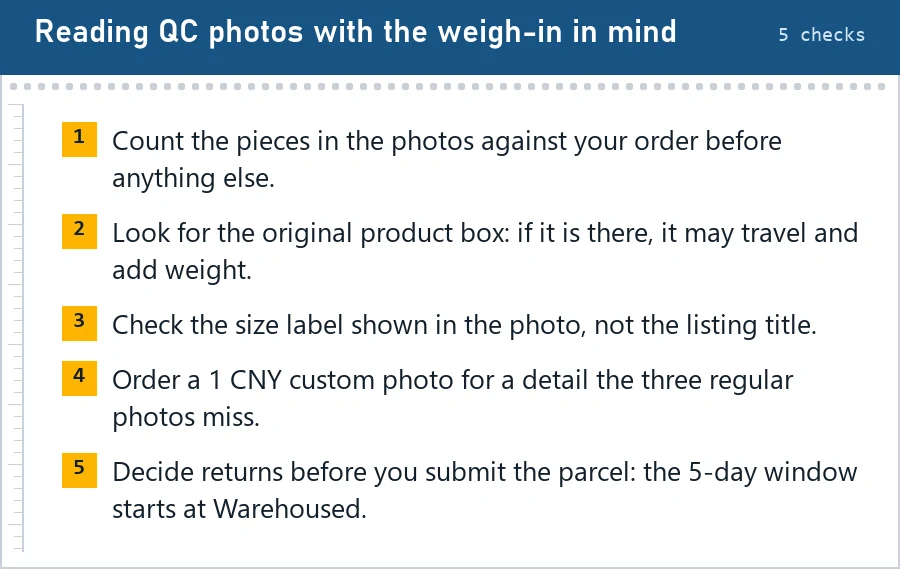
Read the photos for the order first, then for the parcel. Count the pieces against your order. Check the size label in the photo rather than the listing title. Look at the colour under the warehouse lighting and decide whether you can live with it, because colour difference is outside the check.
Then look again with the weigh-in in mind. Is the product box in the photo? A shoebox or gift box that shows up in the QC photos is likely to travel. If one detail decides a return, order a 1 CNY custom photo of it. And settle returns before you submit the parcel: Hipobuy's return window is five days from the "Warehoused" status, and a rehearsed parcel is already packed.
Use a measurement for the question it answers
A garment measurement helps assess size; a warehouse item weight helps estimate mass; packed outer dimensions help assess volume billing. Keep these separate. For example, a chest-width photo can expose a sizing mismatch but says nothing about the height of the shipping box. Ask for the measurement required by your decision rather than treating any number beside a photo as a parcel measurement.
QC photographs show visible details at receipt, not an authenticity certificate or a complete function test. Raise a mismatch before rehearsal or dispatch and check the applicable remedy. Once the items and packing are settled, use the route’s own billing increments and weight rule. A rehearsal describes a packing choice at a point in time; adding another item afterwards can change that result.
Choosing a shipping line with the step size in mind
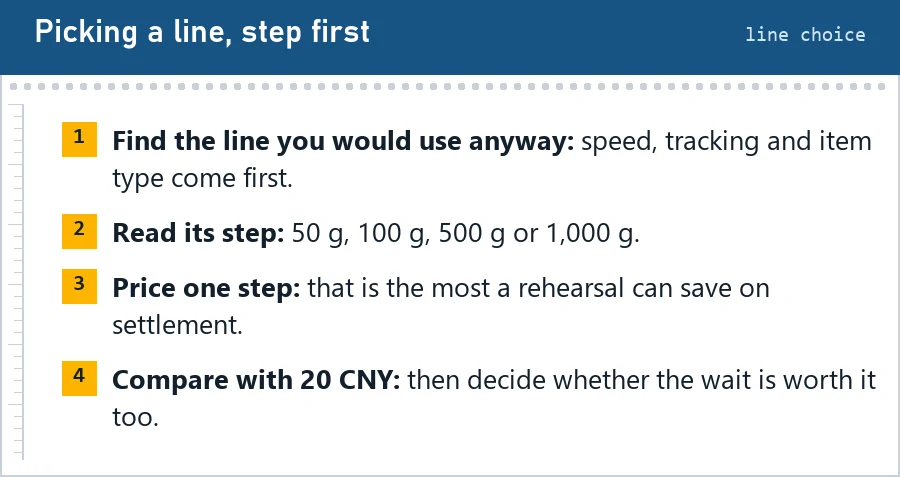
The estimator lists every line for your destination with its delivery window, whether it bills by volume or by actual weight, and its price at the weight you enter. It does not show the step size directly, but the "1st Weight Unit" explanation and the price jumps between weights reveal it. This site's weight steps page has the step size and step price of every line in the 16 October snapshot for six destinations.
For a rehearsal decision, the shipping line matters before the weight does. On a 50 g or 100 g line the most a rehearsal can save on settlement is one small step. On a 500 g or 1,000 g line it can be one large step. Pick the line you would use anyway, then check its step. If the line is a 1,000 g postal service with a 60 to 90 day window, ask whether the saving is worth the wait as well as the fee.
Processing times around a rehearsal
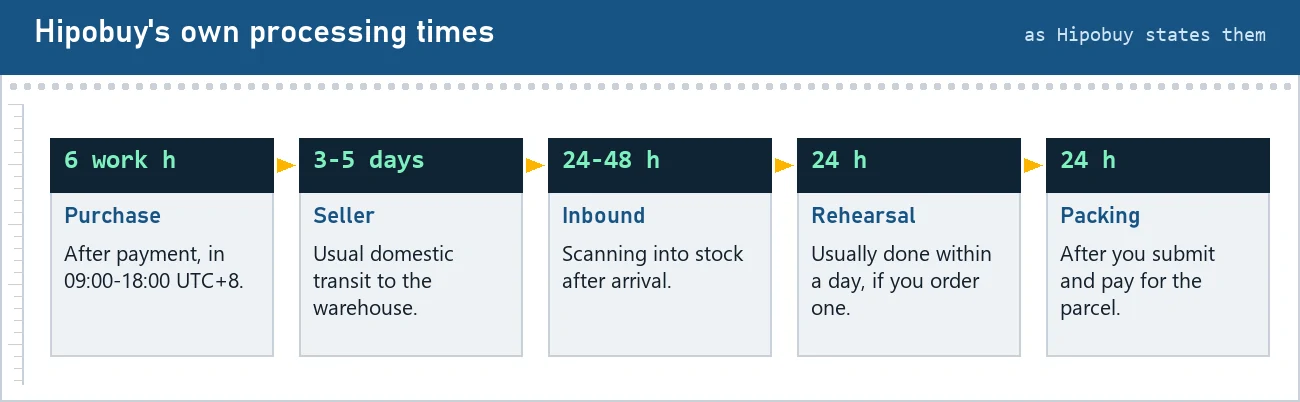
Hipobuy's own processing times frame how long a rehearsal adds. Orders are purchased within 6 working hours of payment during 09:00 to 18:00 UTC+8. Goods from sellers normally need three to five days to arrive. Arrivals are scanned in within 24 to 48 hours. A rehearsal is usually completed within 24 hours. After you submit and pay for a parcel, the warehouse packs it within 24 hours; one interface string says 12 working hours, and the beginner guide's 24 hours is the figure this site uses.
The 90 days of free storage start at the "Warehoused" status; items not submitted by then are treated as abandoned. A rehearsal does not pause that clock, so leave room for it near the end of the free period.
After delivery, separate reporting procedures
Hipobuy's pages give four different clocks after delivery: two days to report damage to the local post office, two working days to send evidence to Hipobuy, 72 hours to contact customer service about missing, damaged or defective goods, and seven days for insurance claims. Those clocks belong to different procedures and cannot be merged into one universal deadline.
Inspect with the courier before signing where possible, and keep the outer box, tape and waybill. The local post-office two-day clause applies after signing when damage or shortage was not inspected with the courier; the two-working-day evidence and 72-hour goods-issue clauses concern Hipobuy’s after-sale process. Insurance separately includes seven days after signing or 45 days after shipping. Ask support which procedure applies and report promptly. A rehearsal does not change those conditions.