
Buying checks before the weigh-in: sites, sellers, items and agents
The checks worth making before an item ever reaches a scale, written for buyers who will later decide on a rehearsal.
Judging a spreadsheet site by its dates and links
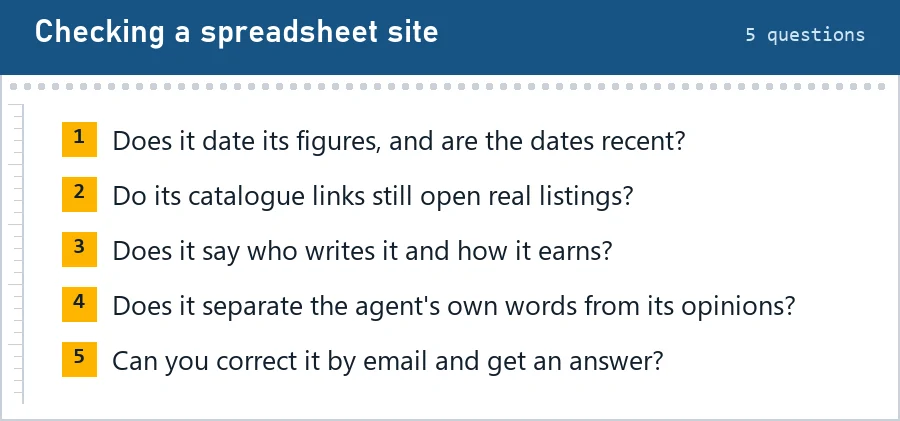
Choosing a spreadsheet site comes down to evidence you can check yourself. Links that work and figures that admit their age are the minimum. Before trusting one, including this one, check that it dates its numbers, that its catalogue links still open real listings, and that it says who writes it and how it earns.
Look for a separation between what the agent says and what the site thinks. This site quotes Hipobuy's pages with links and dates, keeps its own reading clearly marked (for example the literal reading of "refund the difference"), and prints its correction address in the footer. If a site cannot be corrected, treat its figures as decoration.
Vetting sellers before anything ships
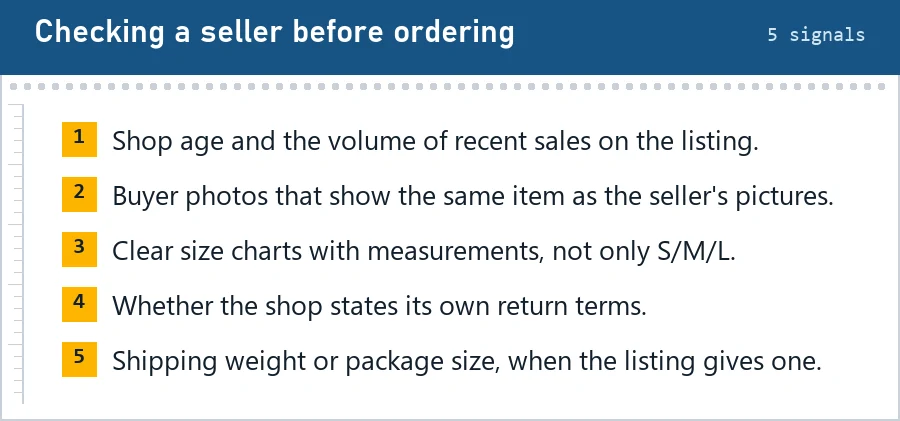
Most problems that end in returns start with the seller, and returns are easier before you rehearse or ship. Check the shop's age and recent sales on the listing, compare buyer photos with the seller's pictures, and prefer listings with a size chart in centimetres over plain S, M and L.
Two signals matter for weight. Some listings state a package size or shipping weight; it hints whether the item comes boxed. And sellers who ship in bulky outer cartons inflate the inbound weight, which the warehouse then strips. Neither is decisive, but both explain an estimate that looks odd.
Picking the right item when weight matters
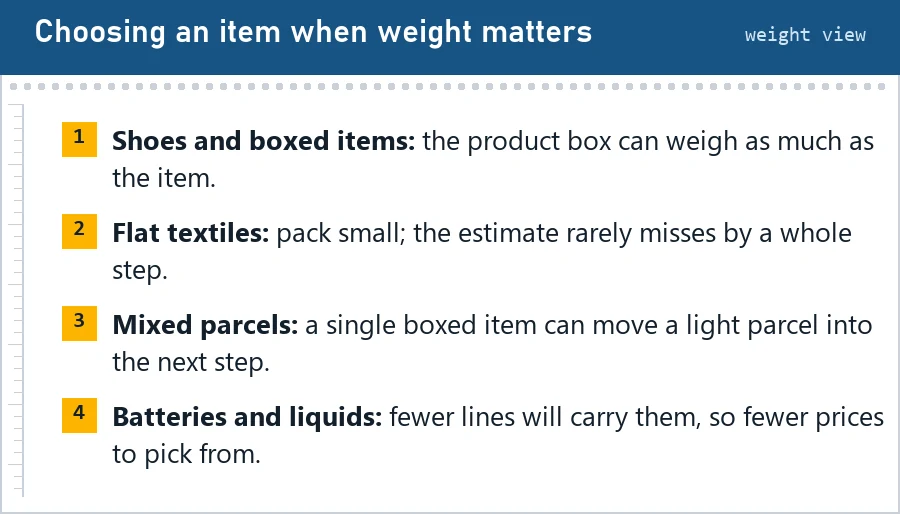
Weight is rarely the reason to buy something, but it is a fair reason to choose between two versions. Boots weigh more than sneakers and both usually travel boxed. A heavyweight hoodie can weigh as much as a light jacket. Several small boxed items can add more packaging than product.
Item type also limits lines. Items with batteries, liquids or magnets are refused by many lines, which narrows the step sizes available to you. If an item forces you onto a 1,000 g postal line, a rehearsal becomes more likely to pay; if it keeps you on 100 g lines, less likely.
Trustworthy agents and the rules they put in writing
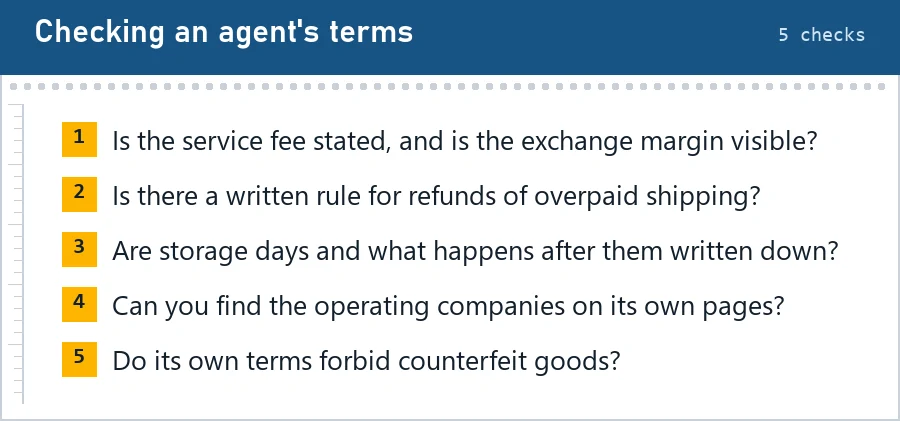
Every agent buys, stores, checks and ships. What separates a trustworthy one is what it writes down. Is the service fee stated? Is the exchange margin visible, or at least measurable? Is there a written rule for refunds of overpaid shipping, and does it say when and where the money goes?
Hipobuy scores well on writing things down and less well on keeping them consistent: three pages describe the shipping refund three ways. Check storage terms, the operating companies named on the agent's own pages, and whether its terms forbid counterfeit goods. Hipobuy's do; see About Hipobuy.
Things to watch before you pay for shipping
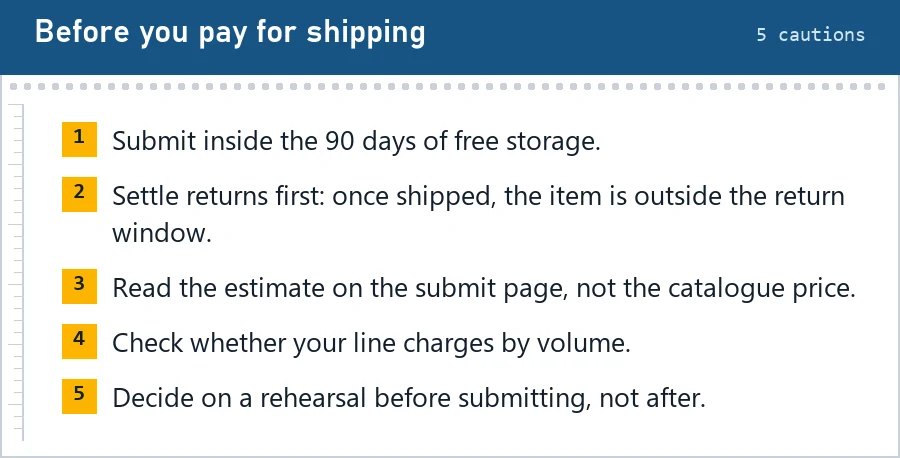
The common mistakes are about timing. Submitting after the 90 free days have run out. Shipping an item you meant to return. Reading the catalogue price instead of the estimate on the submit page. Ignoring whether the line bills by volume.
And the one this site exists for: deciding on a rehearsal after the parcel is already submitted, when the decision is gone. Make the call while the items are still in the warehouse, with the estimate, your doubt and your line in front of you.
Other agents and how their shipping rules differ
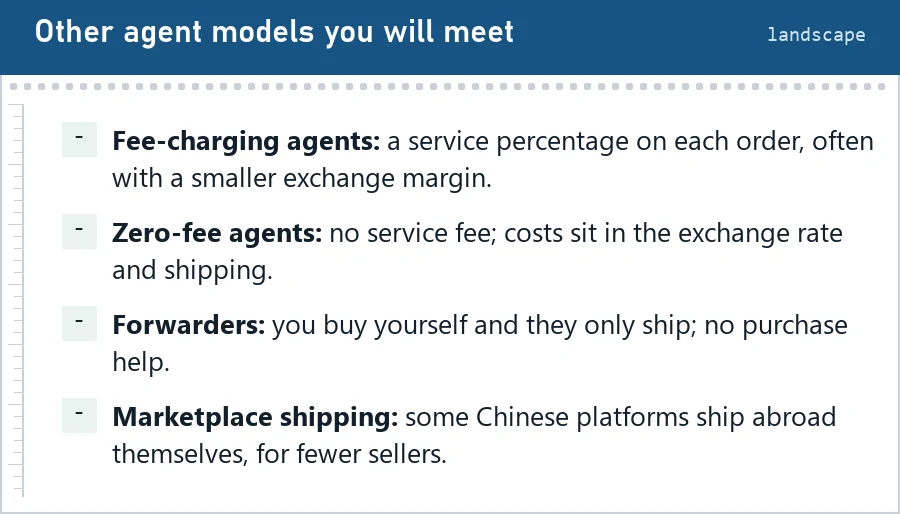
Hipobuy is one of many Chinese shopping agents. They fall into a few models. Some charge a service percentage on each order and may run a smaller exchange margin. Others, including Hipobuy, take no service fee and make their margin on currency conversion and postage. Forwarders do not buy for you at all; you buy from the shop yourself and they only ship. A few Chinese platforms ship abroad themselves for a subset of sellers.
Few agents publish a paid trial packing with a fixed price. If you compare agents, compare how each settles the difference between estimated and actual weight; that rule decides whether a measurement before shipping is worth anything at all.
Your first order, before the weigh-in
Use the official buying sequence to locate the decision you are making. Rehearsal is optional and comes after the relevant goods are stored.
- Order submitted: paste the seller link or complete a custom order, select the variant and pay the item and domestic shipping.
- Order placed: the buyer purchases from the seller; resolve stock or price changes.
- Seller shipped: the domestic parcel travels to the warehouse.
- Arrived at warehouse: arrival precedes inspection and storage.
- Inspection and storage: review QC and measurements, note each item’s Warehoused date and resolve any return request before packing.
- Shipping requested: choose stored items, address, packing and a suitable route. Consider rehearsal if the measurement would change that choice.
- Parcel packed: check final weight, dimensions and any settlement against the earlier quote.
- Shipped: track the parcel and respond to legitimate delivery/customs requests.
- Delivered and confirmed: inspect, keep evidence and report issues promptly.
Ordinary free storage runs for 90 days from Warehoused; unmatched parcels have a separate 30-day clock from receipt. Waiting for another item or considering a rehearsal does not restart an older item’s clock.
Source: Hipobuy beginner guide and storage rules, retained 16 October 2026. QC and delivery checks · Budget for both payments.
A first order before trying to optimise the grams
Choose a clearly described product and save the original link and exact option. Compare its measurements with something that fits, then confirm the buying request and first payment. When it arrives, check QC promptly. A wrong size needs an order enquiry; a missing measurement needs a specific photo request. Neither issue is solved by a cheaper shipping calculation.
After resolving the item, decide what should remain in the parcel. Removing packaging may reduce volume but can reduce protection or affect a return. Combining purchases may save repeated fees but may also cross a billing step. Compare realistic packing choices, allow for the second payment and retain the final invoice. The useful optimisation is a suitable delivered purchase, not merely the lightest possible package.